Ahead of tonight’s third Democratic presidential debate in Houston, the energy capital of the world, EID is taking a deeper dive into several candidates’ climate plans and their potential impacts on America’s power grid.
Top tier contenders including Joe Biden, Elizabeth Warren, Bernie Sanders, and Kamala Harris have laid out plans to achieve a net-zero carbon economy from 2030 to 2050, excluding natural gas from their plans – a fuel source that has been credited with reducing 50 percent more U.S. emissions than wind or solar combined since 2005.

Their plans to move rapidly to renewable energy and electric vehicles while cutting off natural gas appear to be very unrealistic, according to new Energy Information Administration data, which show the massive role natural gas plays in the American power sector.
In fact, the use of natural gas for electricity generation could prevent 1.2 billion tons of carbon emissions from entering the atmosphere, according to a study this year by the International Energy Agency. As IEA explains:
“Natural gas has low air pollutant emissions, giving it the potential to rapidly improve air quality when substituting other combustible fuels.”
Candidate Stances
The leading 2020 Democratic presidential candidates have laid out extremely ambitious plans to achieve a net-zero emissions and/or decarbonized economy by the middle of the century. They’ve also staked out strong anti-natural gas positions, calling for bans on fracking on federal lands, and in some cases, completely banning the process being used to develop most new U.S. oil and natural gas wells.
For instance, former Vice President Joe Biden’s energy and climate plan calls for moving to a “100 percent clean energy economy and reaches net-zero emissions no later than 2050,” and last week said:
“I guarantee you we’re going to end fossil fuels and I am not going to cooperate with them. Before 2050, God willing.”
Similarly, Sen. Elizabeth Warren has called for “achieving net-zero emissions by 2050,” and she recently tweeted, “I will ban fracking – everywhere.”
On my first day as president, I will sign an executive order that puts a total moratorium on all new fossil fuel leases for drilling offshore and on public lands. And I will ban fracking—everywhere.
— Elizabeth Warren (@ewarren) September 6, 2019
Meanwhile, Sen. Bernie Sanders wants a “complete decarbonization by 2050 at the latest” and tweeted out his plan for a “full fracking ban on public and private lands.”
Any proposal to avert the climate crisis must include a full fracking ban on public and private lands.
— Bernie Sanders (@BernieSanders) September 4, 2019
And Sen. Kamala Harris says her goal is to “reach net-zero global emissions by 2050.” She recently said:
“There is no question I am in favor of banning fracking.”
Natural Gas Continues to Be America’s Top Power Generation Fuel
The move by these candidates to end American natural gas production may be an easy thing to say on the campaign trail, but actually doing so would have far-reaching impacts, especially in the power sector.
EIA tracks the daily power generation mix across the continental United States (minus Alaska and Hawaii). On Sept. 11, the United States produced nearly 11.5 million megawatt hours of electricity, and of that, natural gas accounted for more than 4.5 million megawatt hours, or 40 percent, making it by far the dominant fuel source. For perspective, the next two biggest sources, coal and nuclear – which most candidates are also campaigning to stop using – represented a combined 43 percent of U.S. generation. Wind, hydro and solar combined made up just 13 percent of the energy mix on Wednesday.

EIA is also tracking daily generation mix in 13 balancing authorities and regions across the country. In eight of those regions, natural gas was by far the leading source (California, Florida, Mid-Atlantic, New England, New York, Southeast, Southwest, and Texas). Notably, Florida, the “Sunshine State,” gets more than 70 percent of its electricity from natural gas, according to the U.S. Department of Energy – the highest percentage of natural gas used for power generation of any region analyzed by EIA.
In the Carolinas, Central, Midwest, and Northwest regions, natural gas is the second most used source behind coal in most cases and hydro in the Carolinas. In Tennessee, natural gas and coal each make up 30 percent of the state’s energy mix.
In other words, campaigning to stop using traditional power generation sources, and natural gas in particular, is an easy talking point for candidates, but replacing more than 80 percent of U.S. power generation capacity is another story altogether.
Natural Gas Meets High Demand
During times of high demand, usually in the afternoon and early evening, regions are especially relying on natural gas. As IEA’s report explains:
“Gas delivers valuable energy services, some of which – notably seasonal storage, high-temperature heat for industry, and winter heating for buildings – are difficult to replicate cost-effectively with low-carbon alternatives.”
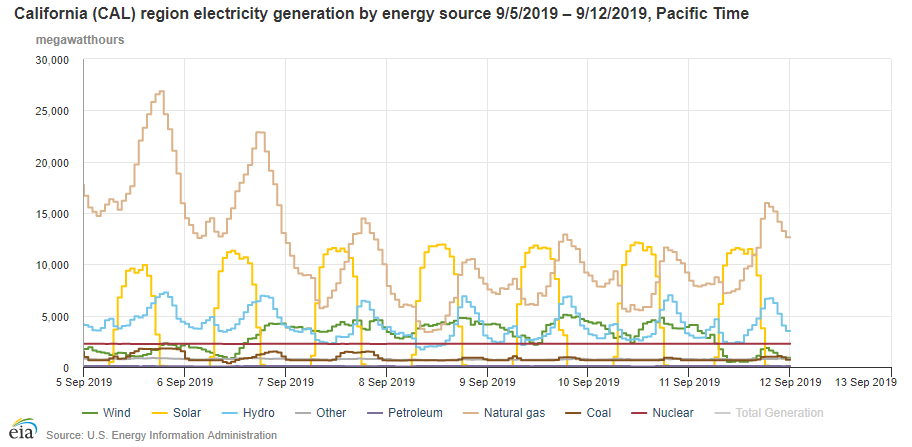
For example, throughout the past week in California, demand peaked each day between 4 and 8 P.M., the same time of day that power generation from natural gas was at its highest. In contrast, power generation from solar topped out around noon when demand was only at half its peak levels.
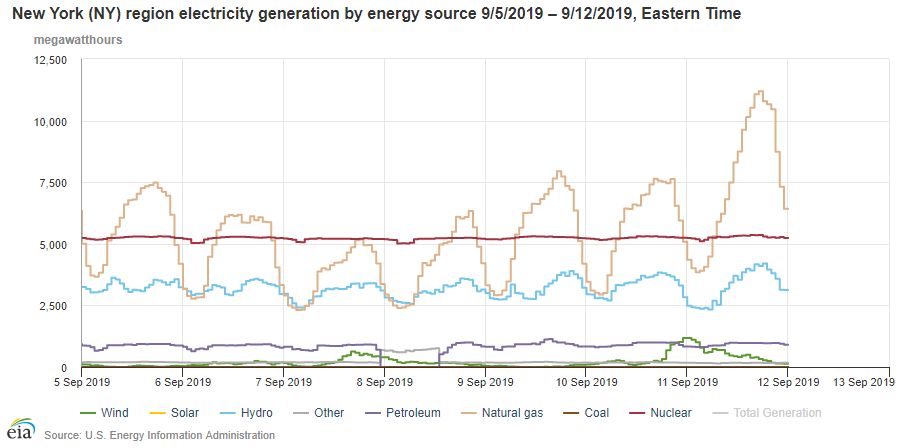
In New York, nuclear is the primary generation source from midnight until early to mid-morning. But for the rest of the day, natural gas is by far the most relied upon source.
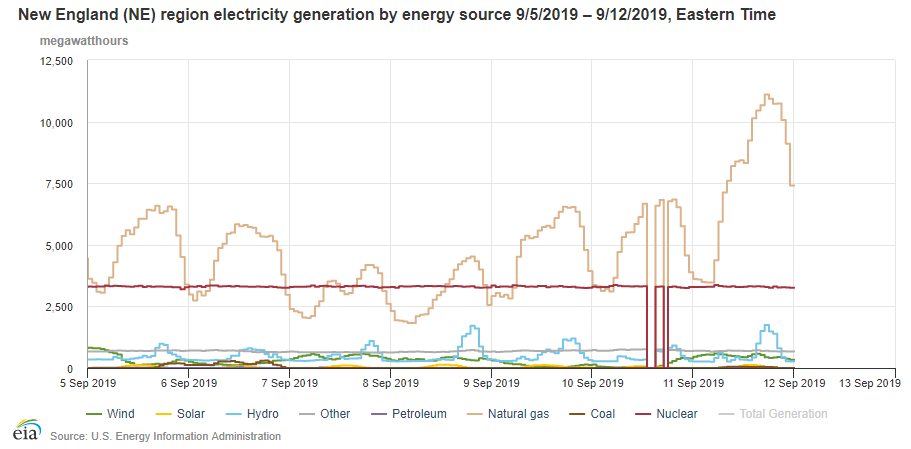
New England is another region that relies on natural gas, but like New York, has restricted its use and hurt consumers. Natural gas is by far the most used source in the region, often generating twice the power as every other source combined.
Unrealistic Energy Plans
The obvious question is: how would these candidates achieve their goals?
With renewables accounting for less than 15 percent of U.S. power generation, how will they realistically increase this to 100 percent, timely enough to replace aging facilities and meet increased demand over the next 30 years?
As these candidates are pushing for decarbonization, they also want to implement a 100 percent electric vehicle mandate. That means there could be millions of electric cars on the road in the future with each one adding an average of 2,268 kW of demand annually to the electric grid.
This will add a major strain on the grid, while simultaneously eliminating the majority of existing power generation by banning oil, natural gas, coal, and nuclear.
These plans come as oil and natural gas producers continue to cut emissions while increasing production, and multiple agencies have made it clear that natural gas is an important part of the future fuel mix.
Clear Answers
Natural gas is the leading fuel source for power generation in the United States and supplies electricity to Americans when they need it most. While renewables have their role, they are nowhere near ready to take over the grid.
When the candidates take the stage tonight and call for decarbonizing the U.S. economy and banning natural gas, will they give clear answers on how to achieve that? And will the debate moderators hold them accountable?
A failure to explain their plans means that Democratic presidential candidates are pursuing unrealistic policies that will cripple the American economy. As IEA’s Executive Director Fatih Birol described to CNN the impact of a fracking ban:
“This would have major implications on the market for the U.S. economy, for jobs growth and everything, and not good news for energy security, because for example U.S. natural gas provides a lot of security to the markets.”
“[S]topping oil and gas production is something that I wouldn’t advise to the U.S. government or another government.”