Energy-related CO2 emissions may have fallen 11 percent since 2019, according to new estimates from the Energy Information Administration. While the majority of these reductions are the result of the COVID-19-related decreased energy consumption in the power and transportation sectors, natural gas played an important role as well.
As EIA explained:
“Natural gas, which accounted for an estimated 36 percent of U.S. energy-related CO2 emissions in 2020, is consumed in several sectors. The electric power sector consumes the most natural gas of any sector, and EIA estimates that in 2020, although electricity consumption declined slightly, the use of natural gas to generate electricity increased.” (emphasis added)
Natural gas CO2 emissions are estimated to have fallen 2 percent in 2020, despite electricity generation from the fuel growing by 55,000 gigawatt-hours (GWh) in the first half of 2020 – 9 percent more than the first half of 2019. Natural gas made up the largest portion of utility-scale electricity generation (38.4 percent) in 2019, making its rise in prominence that much more impactful during times of crisis.

Reduced Emissions Amid Changing Demand
Overall electricity generation decreased by 5 percent this year largely due to reduced business activity once stay-at-home orders were implemented across the country in response to the COVID-19 pandemic. Consequently, energy demand shifted from businesses to households, and electricity consumption patterns changed according to the day of the week and time of day. For example, New York apartments used around 23 percent more electricity during business hours, while the city’s overall energy demand during typical commuter hours – between 6 and 10 AM – decreased by as much as 21 percent.
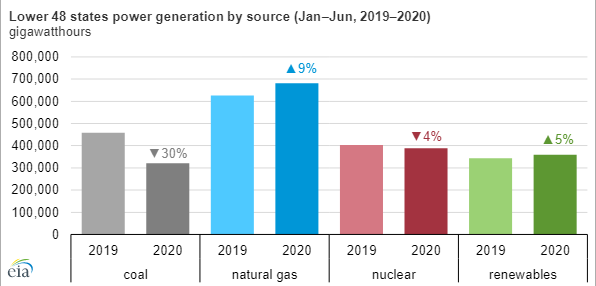
Changing demand requires an adaptable and economical energy mix. Natural gas was the fastest-growing electricity generation resource this year, which the EIA attributes to an increase in natural gas-fired power capacity and declining prices. In the first half of 2020, natural gas prices averaged $1.81/MMBtu, while prices averaged $2.74/MMBtu during the first half of 2019.
In some regions, low natural gas prices have rendered emissions-heavy energy resources uneconomical, fueling emissions-minded transitions such as the shift from coal to natural gas. In April, the Environmental Protection Agency reported a 10 percent decrease in greenhouse gas emissions nationwide since 2005, and a 27 percent decrease in the power sector alone. Natural gas can be credited as a significant contributor to this environmental milestone, especially during a year when the economy unexpectedly grew by 25 percent.
Conclusion
2020 presented a unique opportunity to demonstrate the resiliency of natural gas as an energy resource. When other fuel sectors suffered at the hands of the pandemic, natural gas rose to meet residential energy demand as Americans’ transitioned to life in quarantine. While social distancing has certainly played an important role in reducing U.S. greenhouse gas emissions this year, natural gas will continue to serve as an important part of energy transition strategies going forward.