Environmentalist groups have been trying to chip away at residential natural gas for several years with increasingly restrictive building codes and building decarbonization mandates. Now the campaign is taking a leaf out of the climate litigation playbook, turning to the courts to try to pressure utilities to reduce emissions by reducing the type of energy they can provide to customers.
Last week, a trio of environmental organizations—Environment America Research and Policy Center, the U.S. PIRG Education Fund, and ClientEarth—sued Washington Gas Light in D.C. Superior Court to try to prevent the company from promoting natural gas as clean and sustainable. (As a part of the Public Interest Network, PIRG shares an affiliation with Environment America which Energy In Depth has previously called out for recycling thoroughly debunked reports and redefining definitions to fit its agenda.)
The groups are choosing the litigious route after neighboring Maryland and other states failed to ban natural gas outright in residences and businesses following a long campaign by environmental groups.
The District of Columbia City Council has already passed a measure to ban natural gas in new building construction starting in 2026. This case expands the anti-gas campaign to include existing customers.
Demonstrated Emissions Reduction Isn’t Greenwashing
The lawsuit is a thinly veiled excuse to constrain WGL’s ability to communicate its decarbonization efforts by calling these messages “greenwashing.”
The suit alleges the utility is violating the District of Columbia’s consumer protection law by misleading consumers about the environmental toll of natural gas by describing the fuel as “clean” and a “smart choice for the environment” on monthly bills. According to the plaintiffs this language is “capitalizing” on customers’ desire for more sustainable energy sources without actually providing a clean fuel option.
But this glosses over the real emissions reductions WGL has already made and the company’s ongoing commitment to achieving carbon neutrality.
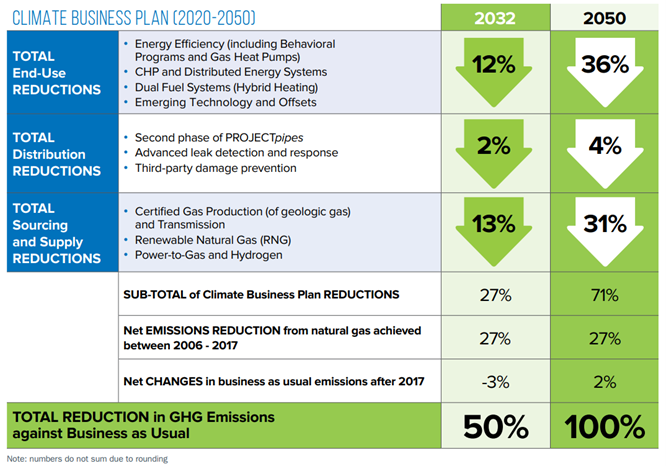
In 2020, WGL and its parent company submitted a comprehensive Climate Business Plan to serve as a blueprint for achieving carbon neutrality in support of the District’s long-term climate goals. Included in that plan were the development of certified low carbon natural gas, renewable natural gas, and green hydrogen. By using these technologies, WGL plans to reduce emissions 13 percent by 2032, and 31 percent by 2050, with the remaining emissions reduced through end-use efficiency and distribution reductions.
Last year WGL also penned a contract with Maryland’s WSSC Water for an innovative renewable natural gas project, which will allow this natural gas to be sold on the open market to utilities like WGL and reduce the facility’s emissions 15 percent.
A Page From the Activists’ Climate Litigation Playbook
However these efforts to reduce emissions and reach carbon neutrality are not enough for the green groups, who are using the case to push for electrification policies that have failed to pass state legislatures.
Though the case is built around claims of false advertising, the activists’ motives are clear. In a statement ClientEarth criticized Washington Gas “for referring to fossil gas in customer-facing materials as clean and sustainable…compared to electrification,” and PIRG and its state affiliates have been advocating for electrification by promoting factually incorrect studies on natural gas’s air quality impacts.
The use of consumer protection laws to attack fossil fuel companies is a strategy that has been employed in cases filed against major fossil fuel companies seeking compensation for damages caused by climate change. Two years ago, D.C. Attorney General Karl Racine filed a lawsuit against BP, ExxonMobil, Chevron, and Royal Dutch Shell alleging that the companies’ marketing materials deceived consumers about the harms posed by climate change. Just days before Racine announced the suit, Minnesota Attorney General Keith Ellison also announced that he was filing a climate fraud case.
The Start of a Broader Campaign?
What is more concerning for consumers is the possibility that litigation alleging deceptive marketing will increasingly be used to restrict their access to natural gas.
Last November, Maryland People’s Counsel David Lapp filed a complaint against Washington Gas & Light Company and its affiliate, WGL Energy Services for deceptive green marketing in the Maryland Public Service Commission, asking for a fine of $1.1 million because company billing statements described natural gas as “a clean energy.”
And in a news update on the recent lawsuit, ClientEarth suggested that other states could see anti-natural gas lawsuits of their own and cited a survey of utility marketing practices by fellow litigant U.S. PIRG Education Fund which “found examples of similar practices by utilities in California, Colorado, Illinois, Maryland, Massachusetts, New Jersey, Oregon, Pennsylvania and Texas.” This suggests that similar litigation could be filed in one of those areas.
The prospect of additional litigation based on absurd complaints from ClientEarth for utilities who dare “even includes on its bills a colorful picture of flowers,” is both harmful to the spirit of the law, and to the budget of individuals in targeted cities. The impact of losing natural gas as a viable energy source will be borne by consumers who are already struggling in a downtrodden economy and face the prospects of high prices this winter.