The Energy Information Administration’s (EIA) 2024 U.S. Energy-Related Carbon Dioxide Emissions report confirms once again what industry experts have long known: natural gas continues to be the leading force behind reductions in carbon dioxide emissions from the U.S. power sector.
The most recent data couldn’t be clearer- even as electricity generation increased, emissions stayed flat thanks largely to fuel switching from coal to natural gas.
The report comes amid the Trump Administration doubling down on its promise to unleash American energy, prioritizing American energy production and security.
Concurrently, the U.S. Department of Energy’s latest LNG export study details the emissions-reducing benefits of U.S. LNG, both at home and abroad, while also highlighting its critical role in economic growth and global energy security.
Emissions Down, Reliability Up
Power sector emissions in 2024 remained near 2023 levels despite a 3 percent increase in electricity generation, according to EIA. The reason: more natural gas:
“Although overall electricity generation increased by 3 percent, or 122 terawatt hours (TWh), in 2024, changes in generation sources resulted in sectoral CO2 emissions remaining near 2023 levels… Although growth in natural gas-fired generation exceeded reductions in coal-fired generation, CO2 emissions did not increase as much because natural gas emits less CO2 per kilowatt hour than coal when combusted.”
That’s not a one-off. EIA data show that natural gas is responsible for approximately 60 percent of all power sector emissions reductions since 2005, as well as year-over-year, including in 2024.

In total, natural gas has helped cut emissions by 6,343 million metric tons (MMT) of CO₂ over that period – the equivalent of taking more than 1.47 billion gasoline-powered vehicles off the road for a year, according to the U.S. Environmental Protection Agency’s Greenhouse Gas Equivalencies Calculator.

In 2024 alone, increased use of natural gas for electricity generation delivered an emissions reduction of 687 MMT of CO₂ – equivalent to the carbon sequestered by 689.1 million acres of U.S. forests in one year, a clear display of environmentally conscious power production.
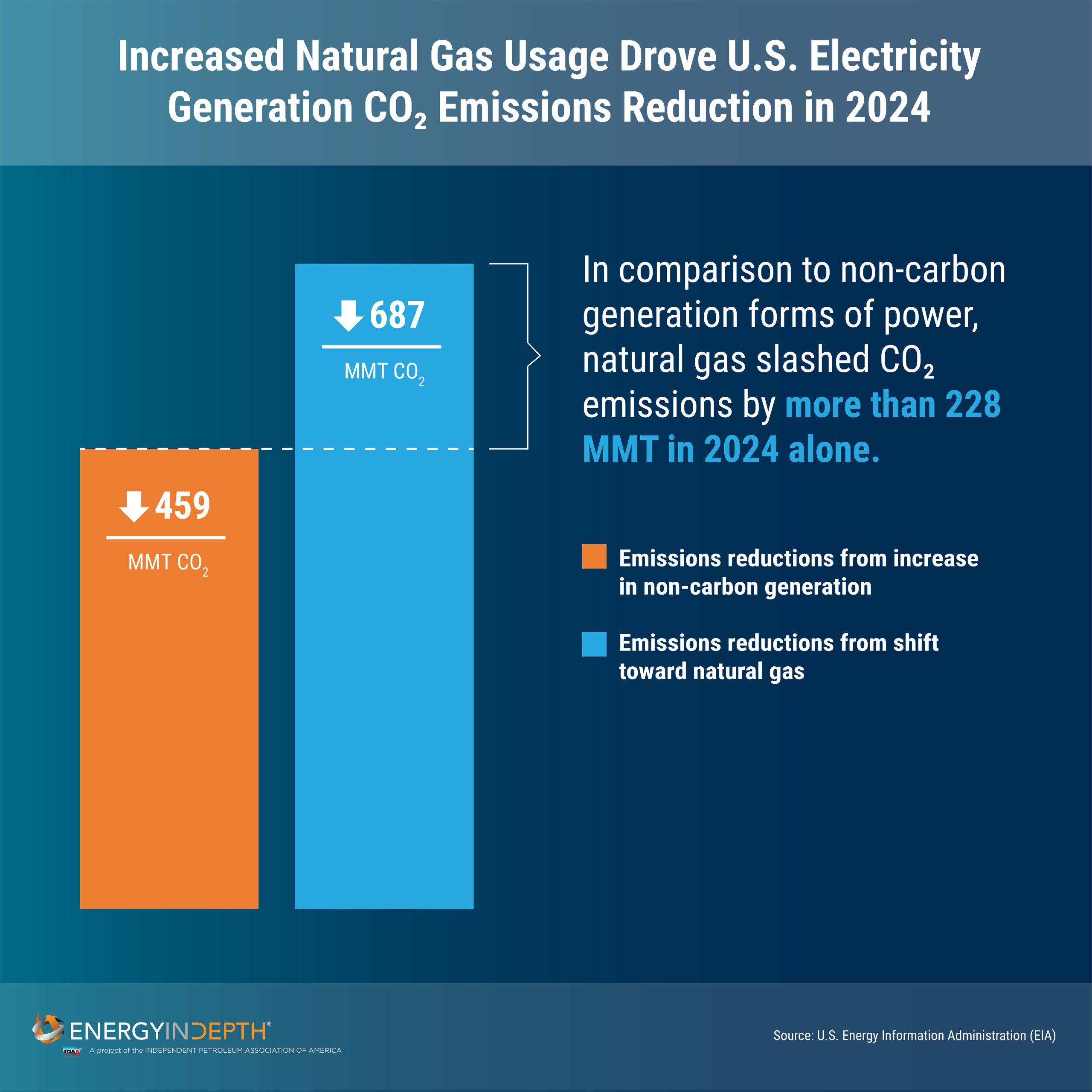
Bottom line: Natural gas isn’t just keeping the lights on – it’s helping drive historic emissions reductions while providing affordable, reliable power to American families and businesses. The EIA’s latest findings add to a growing body of evidence that U.S. natural gas is not a climate problem, it’s part of the climate solution.