Recently uncovered outside counsel agreements between New Jersey, Chicago, and plaintiffs’ law firms provide fresh details about the millions of dollars private firms stand to make if they prevail in their mission to “take down” American oil and gas companies.
Remember, cities and states have gone to great lengths to hide these contracts from their taxpayers. Despite the significant public interest, each of these contracts was only made public through open records requests and litigation.
Let’s dive in.
Chicago: Sher Edling’s Role in Other Climate Suits Is a “Conflict of Interest”
First, the City of Chicago’s newly released contingency agreement, obtained by watchdog group Government Accountability and Oversight (GAO), entitles so-called public interest lawyers to tens of millions of dollars in the case of a successful settlement – a number greater than many localities’ annual budgets:
“The City will pay the Firms 25% of all recoveries up to $100 million. If the Firms secure a larger award, the firms will received a 15% cut on the next $50 million. For any dollar that surpasses $150 million, the firms will receive a marginal 7.5% cut.” (emphasis added)
Chicago has hired two separate law firms – Sher Edling and DiCello Levitt – to represent the city in its lawsuit. Based on the city’s arrangement, if the firms secure a settlement of $100 million or more, they’ll be entitled to a whopping $25 million.
Importantly, both firms represent other states and municipalities in copycat climate lawsuits, each of which request similarly astronomical damages. This means that if the firms succeed in “bankrupting” oil company defendants in other cases, Chicago could be left out in the cold.
In its contract, Chicago acknowledged that this creates an inherent conflict of interest between the city and its lawyers. However, rather than disqualifying Sher Edling and DiCello Levitt, Chicago waived these ethical concerns:
“The City understands that the Firms would not take on this engagement if it required the Firms to forego or withdraw from representations like those described above. […]
“The City has determined that it is in the City’s best interest to waive such a potential or actual conflict of interest resulting from damages collected from in other Similar Climate Litigation prosecuted by the Firms.” (emphasis added)
In waiving the conflict of interest, and acknowledging that the suit could result in no damages at all, Chicago puts taxpayers’ resources at risk and reveals only political motivations are behind the lawsuit.
New Jersey Offers Similar Fees, But Places on Emphasis on Getting to Discovery
The State of New Jersey’s contract with Sher Edling, which was also recently obtained through an open records lawsuit filed by GAO, is unusual in that the incentives for the law firm to get to discovery are even more powerful than the pressure to win a large settlement:
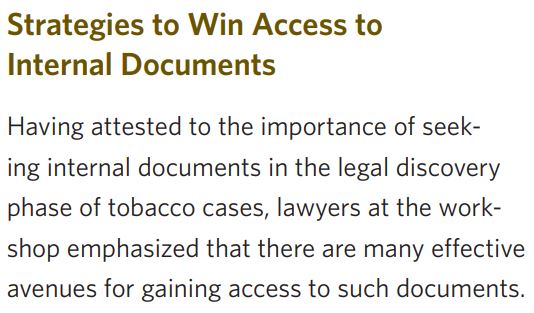
For a normal lawsuit, these incentives might not make sense. But climate lawsuits don’t have traditional goals. Dating all the way back to the original strategy meeting at La Jolla in 2012, activists have been laser-focused on obtaining internal company documents, not necessarily winning cases.
The New Jersey AG appears to be overseeing a fishing expedition on behalf of the Rockefeller-backed national climate campaign, not his constituents. Not to mention, climate activists have already combed through hundreds of thousands of industry documents only to find nothing that holds up in court.
Let’s Not Forget: Sher Edling Has Other Sources of Revenue
Recall that while Chicago and New Jersey sign away millions to Sher Edling, the firm is simultaneously bankrolled by billionaire activists to pursue the same cases.
According to tax filings, activist-backed organizations such as the Leonard DiCaprio Foundation, the Rockefeller Brothers Fund, the Hewlett Foundation, and the MacArthur Foundation have donated millions to the Collective Action Fund for Accountability, Resilience, and Adaptation (CAF), which has in turn funneled at least $10.7 million directly to Sher Edling.
But since Sher Edling is a for-profit law firm and is not held to the same disclosure standards as nonprofits, it’s likely that additional donations to the firm have gone unreported. In fact, members of the Minnesota House of Representatives pointed out this out in a letter to the Minnesota AG’s Office in April, where they noted that Sher Edling has received upwards of $13 million from the CAF and other wealthy left-wing foundations:
“Given the challenges in researching monies paid to a private law firm, we suspect the above may represent only a fraction of the total amount of financial support that has been funneled to Sher Edling to pay for ongoing climate litigation in Minnesota and elsewhere.”
Bottom Line: The lucrative incentives offered by states and cities to lawyers for their work on climate cases are a backdoor tax on American consumers. We should be focused on alleviating Americans’ bills through reduced energy costs rather than finding creative ways to enrich plaintiff’s attorneys.