The switch to natural gas has helped the United States to dramatically reduce emissions, and is having similar impacts in individual states. As the world celebrates the 50th anniversary of Earth Day, let’s take a look at the important role natural gas has played in lowering emissions in the top five carbon emission reducing states between 2005 and 2017.
#1 Ohio
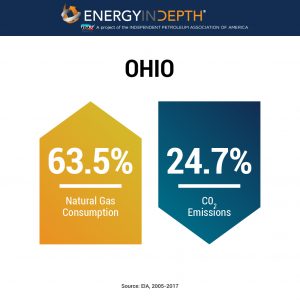
Since 2005, Ohio has reduced its emissions by more metric tons of C02, than any other state in the country. In fact, between 2005 and 2017, state emissions have declined by 67 million metric tons or 24.7 percent, according to U.S. Energy Information Administration data. Meanwhile, Ohioans consumed 63.47 percent more natural gas than they did in 2005, and have plans to build several new natural gas-fired power plants.
Notably, Ohio is also a major producer of oil and natural gas. The Buckeye State’s natural gas production increased from 83,494 mcf to 1,731,690 (over 1,974 percent!) during the same period.
#2 Pennsylvania
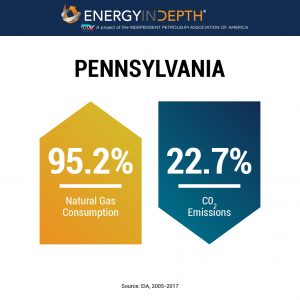
Ohio’s Appalachian Basin neighbor Pennsylvania scored the No. 2 spot with a total reduction of 63 million metric tons – a 22.7 percent decline. Meanwhile, this major energy producing state saw natural gas consumption grow by 95.2 percent while production increased by a staggering 3,112 percent, making the state the second highest producer of natural gas in the country.
#3 Indiana
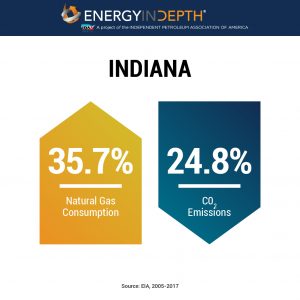
The Midwest state of Indiana holds the No. 3 position for emissions reductions. The state was able to reduce its emissions by 63 million metric tons between 2005 and 2017, while increasing consumption of this cleaner fuel source by 35.7 percent and increasing its in-state natural gas production by 88.64 percent.
#4 Georgia
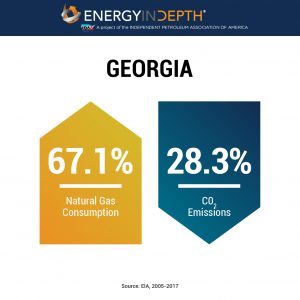
Georgia proudly represents the southern states as the fourth largest reducer of carbon emissions since 2005 with an absolute decline of 52 million metric tons of carbon. While we typically think of natural gas as a key fuel for colder states that rely on it to heat their homes in the winter time, Georgia has seen its natural gas consumption increase by 67.1 percent, standing as testament to the diverse role that natural gas plays in our everyday lives.
#5 New York
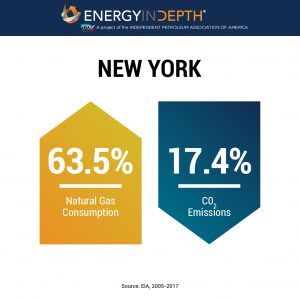
New York’s relationship with natural gas is perhaps the most complicated of them all. The state has increased its consumption of the fuel source by 14.6 percent since 2005 and has in turn, benefited from a 51 million metric ton, or 17.4 percent decline in carbon emissions. Despite its benefits, Gov. Cuomo and “Keep it In the Ground” activists continue to block pipeline development and production opportunities that would give New Yorkers greater access to this cleaner fuel alternative.
Conclusion
EID’s analysis of EIA data shows a clear correlation between state’s embracement of natural gas and the successful reduction of carbon emissions. Thanks to the work being done in these states and others, the United States has been been able to lead the world in reducing emissions. As IEA director Fatih Birol explained,
“In the last 10 years, the emissions reductions in the United States has been the largest in the history of energy.”
Especially on Earth Day, this data serves as an important reminder of the important role that natural gas will continue play in our ability to tackle climate change.