Energy-related CO2 emissions declined by 2.8 percent from 2018 to 2019, according to data recently published by the Energy Information Administration. The emissions drops in 2019 are significant when looked at beside the broader U.S. context: despite an energy consumption decline of 0.9 percent in 2019, gross domestic product increased by 2.3 percent in the same year. Put simply, the United States managed to reduce its emissions despite having a robust and growing economy in 2019.
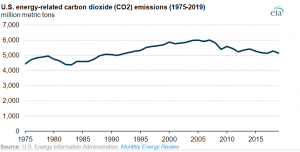
But what drove the reduction in CO2 emissions during the last year?
The EIA’s annual CO2 data also show that coal-related emissions decreased by 14.6 percent in 2019, the largest annual percentage drop since 1973. This was caused by a decrease in coal consumption for energy generation: overall coal consumption for energy decreased by 45.7 percent between 2010 and 2019. Meanwhile, natural gas’ use in energy generation has ramped up quickly to become the fastest growing energy source in the United States.
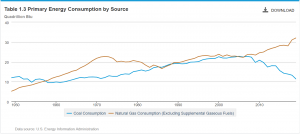
This has been key not only from an energy transition and economic perspective. Indeed, the gasification of the U.S. power sector has democratized energy supply, guaranteeing steady and affordable energy for most Americans. Additionally, natural gas’ growing role in the generation mix has also helped offset global CO2 emissions, positioning the United States as the leader in carbon dioxide reductions since 2005.
In fact, over the last decade, CO2 emissions derived from the energy sector have decreased by 8 percent and by 14 percent since 2005. Although there have been some emissions spikes during the last decade, the general trend shows an overwhelming decrease in CO2 emissions from the U.S. energy sector, particularly in 2014-2015, which coincided with the Paris Climate Agreement.
2020 preliminary numbers have naturally reflected a significant decrease in CO2 emissions due to the drop in energy demand caused by COVID-19. Nonetheless, once demand is back to business as usual, data such as this show it is likely that these declining trends in energy-related emissions will continue, largely thanks to natural gas.