The transition to natural gas for electricity generation could prevent 1.2 billion tons of carbon emissions from entering the atmosphere, according to a new study by the International Energy Agency.
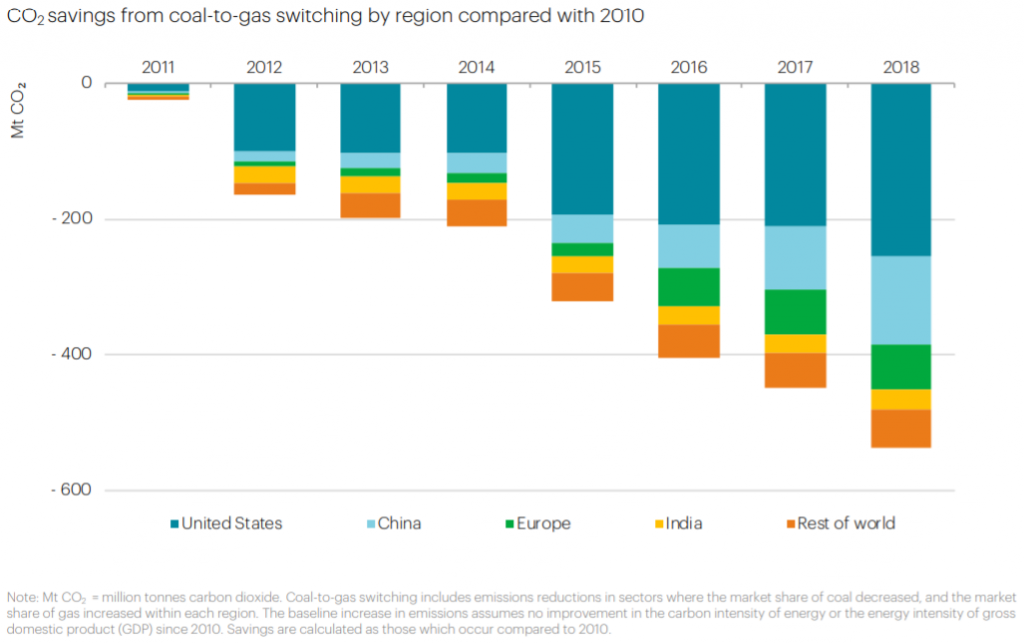
In fact, simply by using existing natural gas-fired power plants to replace higher-emitting fuel sources, global power sector emissions could be reduced by 10 percent, while total energy-related C02 emissions could decline by 4 percent. As IEA explains:
“In mature markets like the United States and European Union, coal-to-gas switching is a compelling near-term option for reducing emissions, given existing infrastructure and spare capacity. Gas can also contribute to security of supply by balancing variable renewables and meeting peaks in demand.”
While the report touts the emissions-reducing environmental benefits of natural gas, it also explains its necessity in the energy mix going forward:
“Gas delivers valuable energy services, some of which – notably seasonal storage, high-temperature heat for industry, and winter heating for buildings – are difficult to replicate cost-effectively with low-carbon alternatives.”
As the above chart demonstrates, the clean-air benefits of natural gas are already being realized in the United States. Since 2005, the use of natural gas for power generation has increased 70 percent, with natural gas now responsible for more than a third of total domestic electricity generation (roughly 35 percent). This transition is responsible for around 18 percent of carbon emissions savings since 2010. As the report explains:
“Natural gas has low air pollutant emissions, giving it the potential to rapidly improve air quality when substituting other combustible fuels.”
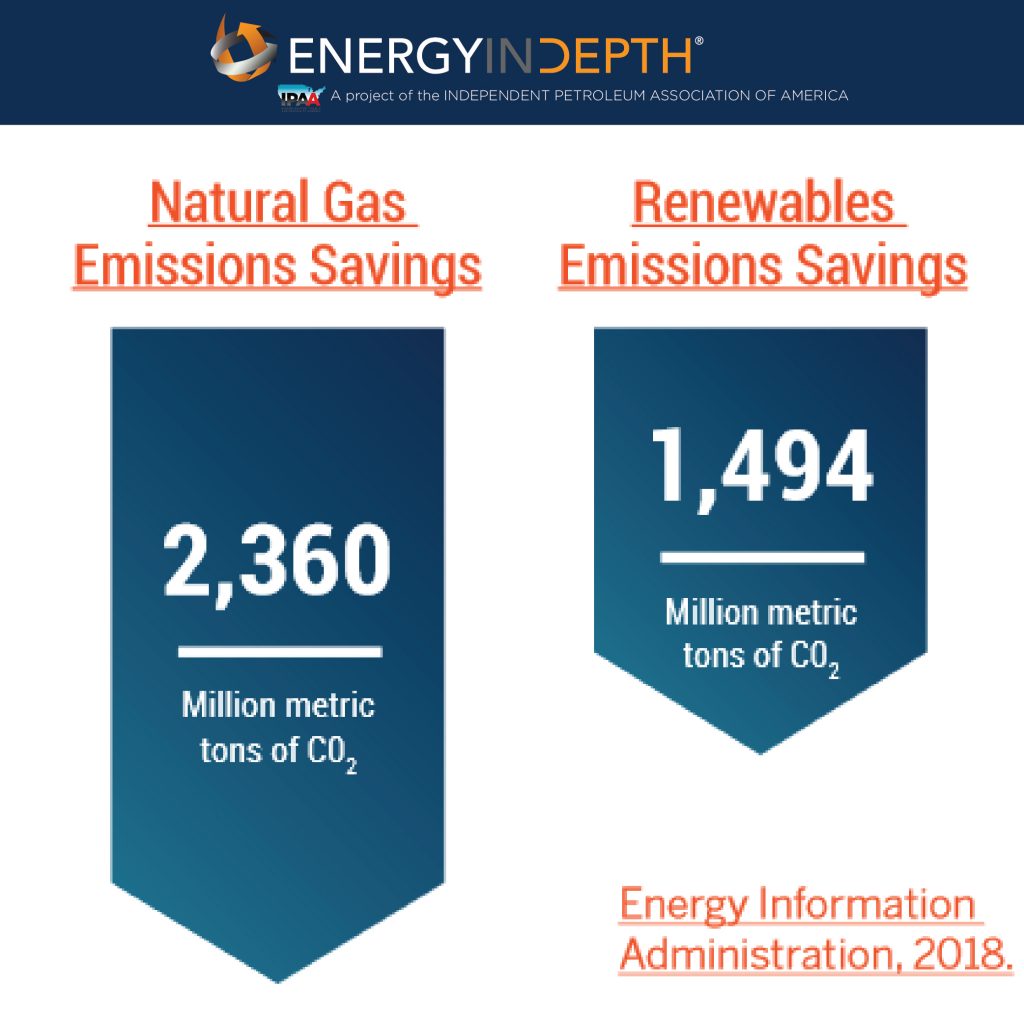
In fact, natural gas has propelled the United States to become the world leader in emissions reductions, representing 50 percent more U.S. emissions reductions than wind or solar combined since 2005.
U.S. Fast-Tracked to Become World’s Top Liquefied Natural Gas Exporter
The U.S. shale boom isn’t just having measured effects on emissions – America will also become the world’s top exporter of LNG by 2024, according to IEA. The agency forecasts that the United States’ LNG exports will outpace Australia’s and Qatar’s in the next five years, with China becoming the world’s top importer.
According to a recent Oil Price report:
“The United States, which is already the world’s biggest gas producer, will see production grow to over one trillion billion cubic meters in 2024, boosting its share of global output to about 23 percent.”
Thanks to the shale revolution, the United States has transitioned from a position of energy scarcity to one that can meet domestic demand while supplying the world with this important resource.
In fact, just this week federal regulators approved a new LNG export expansion project off the Gulf Coast. The proposed project will add 11.5 million metric tons of new capacity to Kinder Morgan’s terminal in Mississippi. This is the fifth natural gas export project approved by the Federal Energy Regulatory Commission this year alone, highlighting the growing demand for U.S. natural gas across the globe.
As IEA Executive Director Fatih Birol recently explained:
“The second wave of the U.S. shale revolution is coming. It will see the United States account for 70 percent of the rise in global oil production and some 75 percent of the expansion in LNG trade over the next five years. This will shake up international oil and gas trade flows, with profound implications for the geopolitics of energy.”
And if IEA’s latest report is any indicator, U.S. natural gas is going to have a major impact on improving air quality throughout the world.