The U.S. electric power sector has surpassed the Obama Administration’s Clean Power Plan emissions reduction targets 11 years ahead of schedule, according to a new report by the Carbon Tax Center.
The CPP aimed to cut carbon emissions from electricity generation by 32 percent of 2005 levels by 2030. But in 2019, the power sector exceeded all expectations – without the CPP ever being implemented – by reducing emissions by 33 percent since 2005, thanks in large part to natural gas.
Even more impressive, the rate of carbon emission reductions has continued to accelerate. During the first three years of the Trump administration, the use of coal for electricity generation shrank faster than in years prior. At the same time, electricity generation from natural gas grew by 22 percent and now makes up the largest share of electricity generation.
The result? The pace of carbon reductions in these three years exceeded the average reduction rate over the prior eleven years by 25 percent.

Natural Gas Has Done More to Decrease Emissions Than Renewables
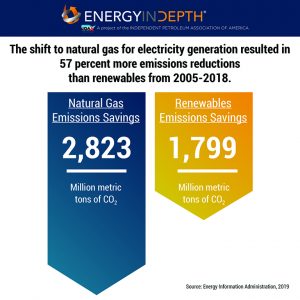
The Carbon Tax Center report also found that natural gas is responsible for 38 percent of the electricity sector emission reductions, while wind and solar account for approximately 20 percent combined. The largest contributor to the industry’s impressive emission reductions is electricity savings, described in the report as “allowing economic output to expand without increasing electricity usage.”
U.S. Energy Information Administration data similarly show that the increased use of natural gas has resulted in greater energy-related carbon emissions savings than all other sources since 2005, and the International Energy Agency said in 2018 that without the switch to natural gas in power generation, the global spike in energy-related carbon emissions of 1.7 percent “would have been more than 15 percent greater.”
Growing Body of Evidence Touting Benefits of Natural Gas
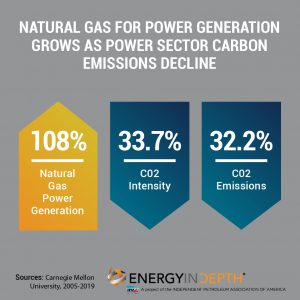
This report echoes the findings of a recent Carnegie Mellon University Power Sector Carbon Index report, which revealed that carbon emissions and carbon intensity have been on a steep decline since 2005. The CMU report showed the power sector beating the CPP’s emissions goals by a more modest margin than the Carbon Tax Center; however, both found this phenomenon occurred in 2019.
These reports both point to the incontrovertible fact that natural gas is playing a major role in helping the United States meet climate targets and is essential for any clean energy future. As Daphne Magnuson, a spokeswoman for the Natural Gas Supply Association, explained:
“Bringing natural gas to the electric grid has enabled bringing on more wind and solar and renewables, highlighting how natural gas is an essential building block of a clean energy future.”