Oil and natural gas systems have the greatest potential for reducing global methane emissions, according to the United Nation’s recent Global Methane Assessment.
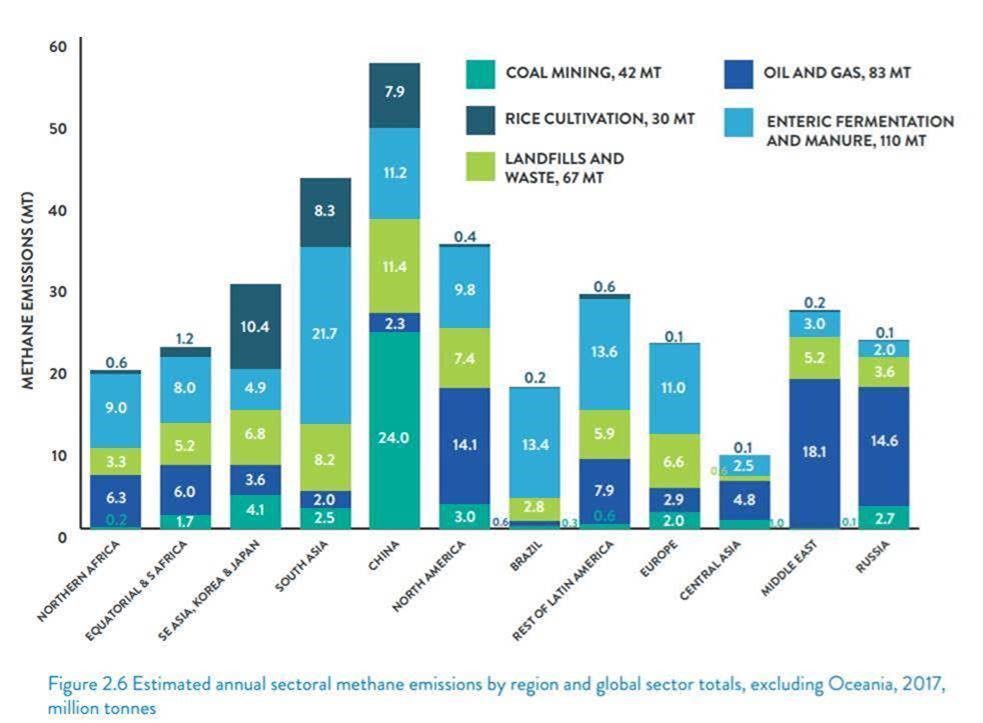
Notably, data from this comprehensive analysis show that North American methane emissions from oil and gas systems represent less than 4 percent of anthropogenic and less than 2 percent of total global methane emissions – a testament to the significant strides North American producers are taking to reduce these emissions.
While the study estimates that methane emissions from fossil fuels globally will grow, it also provides multiple industry-specific actions for the industry to reduce its methane footprint at negative or low costs, many of which are already being employed in North America.
North American Emissions Represent Small Portion of Total Emissions
The assessment finds that anthropogenic (human-made) emissions account for 380 million tonnes (MT) annually, while naturally-caused emissions account for 367 MT/year for a total of 747 MT/year of global methane emissions. As the report explains:
“Globally, wetlands are the largest natural source of methane with emissions, estimated at 102–200 Mt/yr on average over 2008–2017 which is approximately one quarter of global methane emissions.”
Agricultural activities make up the largest share of anthropogenic emissions (40 percent), followed by fossil fuels (35 percent) and landfills and waste (20 percent). According to the report:
“Within the fossil fuel sector, at the national level, emissions from the oil subsector in Russia and the coal subsector in China appear to be far larger than any other national level subsectors.”
All North American oil and gas emissions make up less than 2 percent (14.1 MT/year) of global methane emissions, compared to nearly 15 MT/year in Russia alone.
Reductions for the industry are low-cost
The report underpins that from the three main sectors, the greatest potential for targeted mitigation solutions by 2030 would be in the oil and gas sector, with the potential to reduce emissions by between 29 and 57 MT/year:
“Within the oil and gas subsector, across available analyses mitigation potentials are greatest for oil production, followed by natural gas production and then downstream gas.”
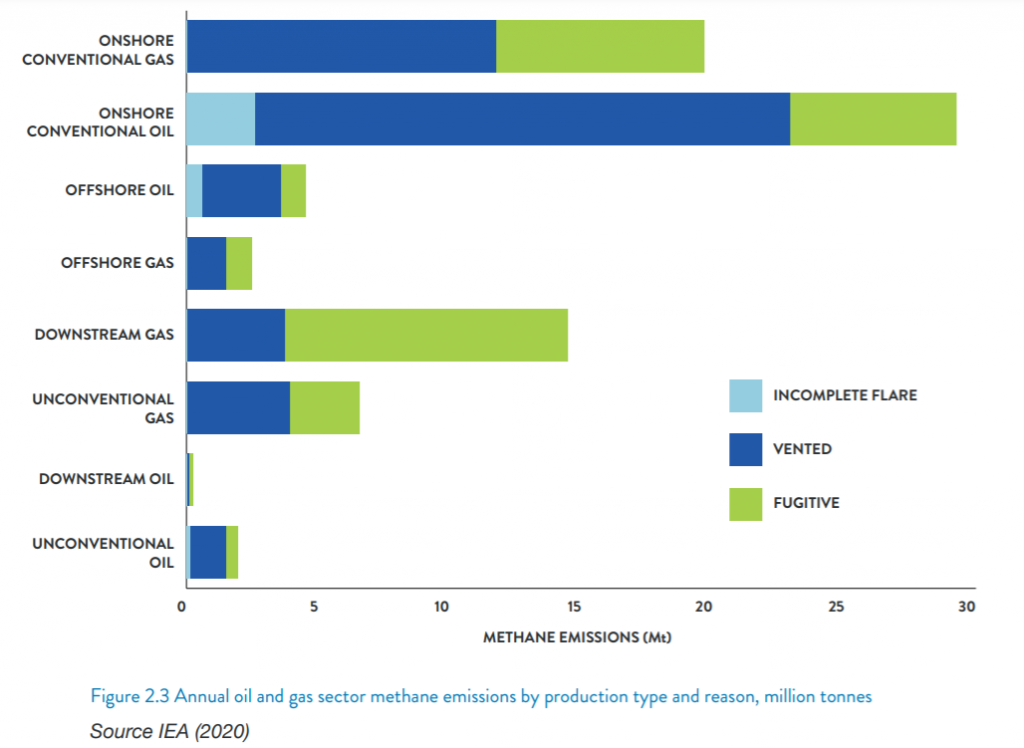
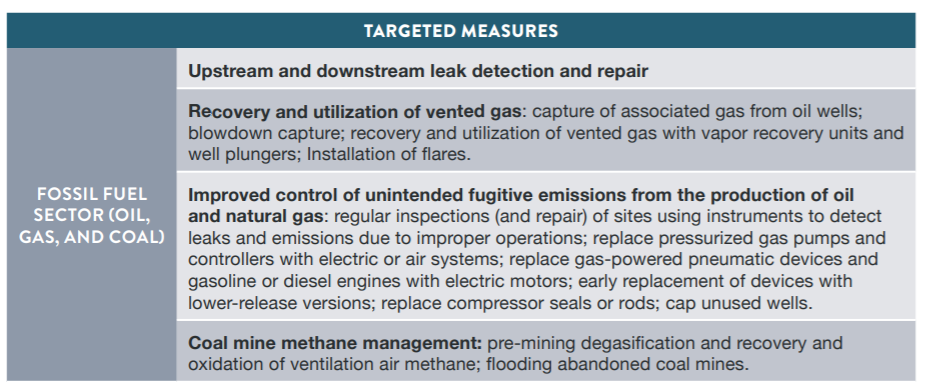
Moreover, the report recognizes the role methane recovery and methane repurpose play – already a common practice in the industry – as part of the suggested low-cost solutions for the subsector in particular:
“The greatest potential for negative cost abatement is in the oil and gas subsector where captured methane adds to revenue instead of being released to the atmosphere.”
The U.S. Oil and Gas Industry Is Leading the Way In Emissions Reductions
Many of these recommendations have already been implemented by the U.S. oil and gas industry. For example, according to the World Bank’s most recent Global Gas Flaring Tracker Report, natural gas flaring in the United States fell by 32 percent from 2019 to 2020, accounting for 70 percent of the global decline. One of the reasons behind the decrease is “new infrastructure to use gas that would otherwise be flared”. As World Bank explains:
“Gas infrastructure capacity in the Bakken area also increased in late 2019, with an additional 23 percent of gas processing capacity coming on stream, enabling increased utilization of otherwise flared gas.”
ConclusionThe U.S. oil and natural gas industry is demonstrating its commitment to reduce methane emissions from its operations, taking collaborative action to identify and repair leaks faster, including through increased investments in satellite and onsite monitoring. As technology and monitoring continue to improve, and more investments are made in infrastructure and carbon capture projects, these reductions will become even more significant.