Well, it looks like the Rockefeller-backed campaign to push the California Attorney General to file more lawsuits targeting American energy companies is ramping up. Following the same script as last week, The Guardian is reporting on polling sponsored by the Center for Climate Integrity. And once again, they relied on the firm that comes with plenty of controversy.
CCI partnered with Data for Progress to put out a new poll that claims that respondents support lawsuits against plastics and fossil fuel companies over plastic pollution. But a review of the poll’s questions and methodology clearly shows the results are incredibly flawed.
The new “research” comes on the heels of a separate misleading story to gin up support for plastic litigation, a playbook they have employed previously to push climate cases. The flurry of activist activity comes as California AG Rob Bonta is reportedly set to conclude an investigation into petrochemical companies that launched in 2022.
DFP Regularly Publishes Dubious Data to Push ‘Specific Narrative’
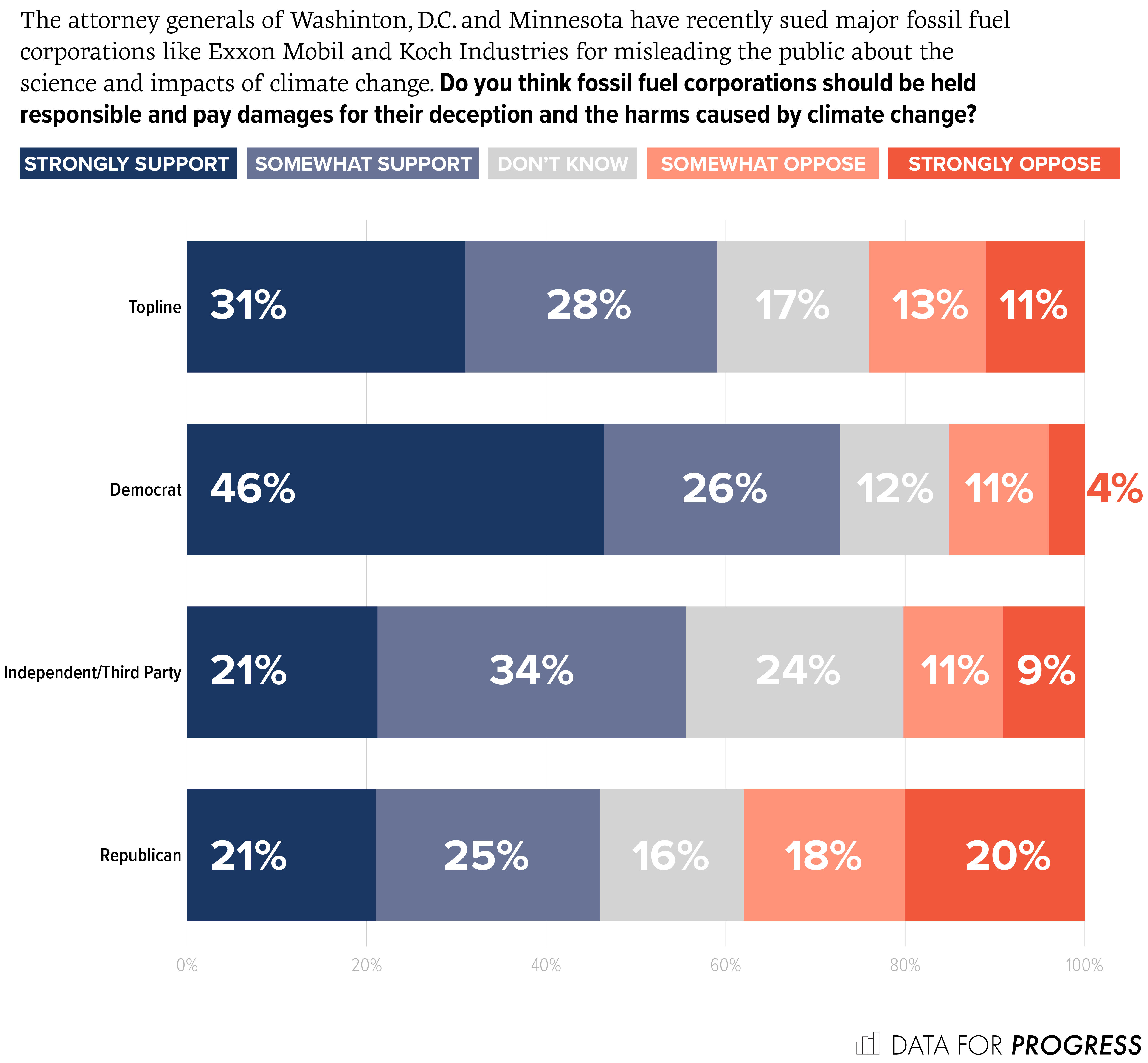
This is not Data for Progress’ first rodeo. In both 2019 and 2020, the group put out polling that purportedly showed the public’s support for climate litigation against America’s energy industry. Sensing a theme?
DFP is a partisan organization that explicitly aligns with liberal causes, and structures its surveys to generate favorable data supporting their policy objectives. The group is a project of Tides Advocacy, a 501(c)(4) nonprofit affiliated with the dark-money group Tides Foundation, which has directly funded the plaintiffs’ lawyers behind climate lawsuits.
Polling experts have long raised concerns about how partisan pollsters like DFP frame questions, especially in ways that are clearly intended to influence results.
In recent years the firm itself has faced additional questions about its credibility. The Nation, a progressive outlet, wrote in 2023 that, “Data for Progress has, at best, a middling record as a pollster—whose polls often seem geared toward pushing a specific narrative.” [Emphasis Added]
DFP’s methodology, which includes the use of web panels, introduces risk for additional bias and opportunities for manipulation. This most recent DFP poll on plastic recycling consists of 1,231 web panel respondents, with partisanship corresponding to self-reported political affiliation, not voter registration. DFP uses weighting techniques to adjust for the fact web respondents are by definition a non-random sample, but this approach still risks being biased towards frequent internet users.
Indeed, evidence suggests pre-recruited web panels do not always account for the broader electorate, especially in more moderate or conservative-leaning regions of the country. Moreover, as Pew Research reported earlier this year, “online opt-in polls can produce misleading results, especially for young people and Hispanic adults.”
DFP’s Poll Questions Deliberately Withhold Key Context To Generate Bad Data
The DFP poll questions citing CCI’s alleged evidence of recycling deception omit critical context, namely that plastic recycling rates have been well known by voters, the press, and elected officials for decades.
By many appearances the survey bears several hallmarks of push-polling, using biasing language to prime respondents and elicit specific reactions. Consider question five, the first informed ballot test question in the survey:
“5. Officials in some states have recently proposed taking legal action against the plastics and fossil fuel industries to hold them accountable for their role in plastic pollution. The officials cite evidence that the plastics and fossil fuel industries deceived the public about the viability of plastics recycling.”
This statement simply encourages respondents to accept deeply misleading claims about the history of plastic recycling at face value, all to bias responses for the remainder of the poll.
Later in the survey respondents are asked to react to a variety of decades-old quotes from fossil fuel companies concerning recycling rates. Again, the poll neglects to mention that recycling technology and recycling uptake rates have been well understood by governments, policymakers, academics, and the general public for decades.
For decades, CalRecycle—which is responsible for the state’s waste management—supported plastic recycling and continued to invest in educational programs and infrastructure to increase recycling rates.
As recent as August 2024, Governor Newsom proudly highlighted investments in California’s recycling system. In a press release from his office regarding investments in plastic beverage recycling sites, the governor was quoted:
“California is taking bold action to transform our recycling systems and reduce the waste filling our landfills and polluting the environment. These modernized recycling sites will make it easier for Californians in every corner of the state to help create a more sustainable and resilient future for our communities and the planet.”
At the same time, policymakers – even those in California, the very state that is now investigating companies’ plastic recycling efforts – have also plainly recognized the very realities associated with plastic recycling that the DFP poll misleadingly implies were unknown. That is fundamentally dishonest at best, but considering DFP’s history it should not be surprising.
BOTTOM LINE: Activists continue to employ a full-court press to push CA AG Bonta to file a recycling lawsuit, all while Rockefeller-backed climate suits remain mired in procedural delays and setbacks.